Ancient Tribal Horse Embroidery Design
First Impressions: A Quiet, Confident Presence
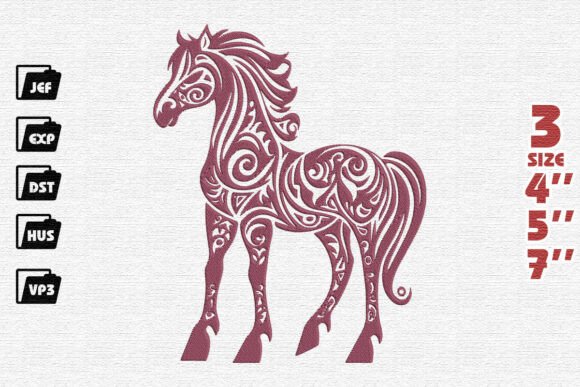
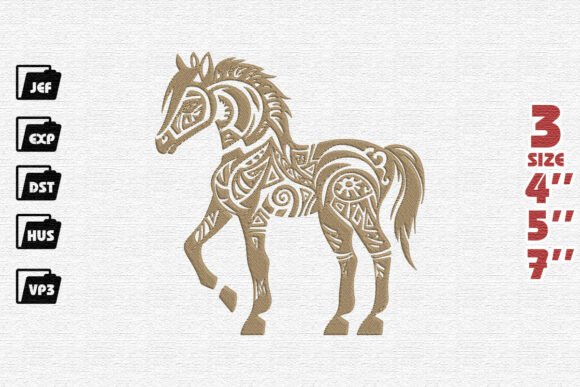
When I opened the Ancient Tribal Horse Embroidery Design, I didn’t see just another horse motif—I saw a quiet, grounded energy. It’s not flashy or hyper-realistic; it’s stylized with deliberate rhythm, echoing carved wood or weathered stone. The horse walks—not gallops—with clean, unbroken silhouette lines and subtle internal texture that suggests age, reverence, and hand-carved intention. There’s no clutter, no filler, no forced realism—just confident negative space and intentional line weight. That makes it instantly adaptable: it reads clearly at 3 inches on a baby onesie and holds presence at 6 inches on a linen tote.
Real-World Test: A Custom Linen Tote for a Local Boutique
I used the Ancient Tribal Horse Embroidery Design on a natural linen tote bag for a small-town herbal apothecary. Their brand leans into earthy minimalism and slow craft—no logos, no slogans, just meaningful symbols. This design fit like it was made for them. Stitched in matte ecru thread on oat-colored linen, the horse emerged with gentle authority. Customers paused. They touched the stitching. They asked about the meaning—not because it’s literal, but because it feels *carried*, like something passed down. That kind of resonance is rare in machine embroidery designs—and invaluable for handmade product storytelling.
Where It Shines (and Why)
- Custom apparel: Works beautifully on sweatshirts and relaxed-fit tees—especially when placed off-center or along a seam. Its walking pose creates movement without visual noise.
- Tote bag design & aprons: The balanced silhouette fills space without overwhelming. No dense fill stitch clusters to stiffen fabric—just thoughtful satin and running stitch transitions.
- Baby embroidery & nursery decor: Soft enough for heirloom swaddles or pillow covers, yet distinct enough to avoid “cute overload.” Parents appreciate its quiet dignity.
- Embroidered patch & cap embroidery: Holds up well on curved surfaces if hooped carefully—the outline stays crisp, and interior details don’t blur.
- Holiday embroidery & wedding gifts: Feels timeless, not seasonal. Perfect for a groom’s handkerchief or a couple’s “first home” tea towel.
Where to Proceed With Care
The Ancient Tribal Horse Embroidery Design isn’t fragile—but it does ask for thoughtful execution. Its strength lies in clarity, so compromise that, and you lose its voice.
- Small hoop sizes: Avoid cramming it below 3 inches wide. Tiny versions sacrifice the graceful line flow and risk stitching ambiguity in the legs and mane.
- Textured or stretchy fabric: On terry cloth towels or ribbed knit caps, stabilize generously. The design’s clean edges need firm support to stay defined.
- Dark fabric + light thread: Test contrast first. Some matte threads recede on deep charcoal or navy—try a slightly warmer ecru or soft taupe instead of stark white.
- Frequent-wash items: While the stitch density feels moderate, check where fine interior lines meet curves—they’re delicate by intent, not flaw. Reinforce with tear-away + cut-away stabilizer combo for baby clothes or kitchen towels.
What It Adds to Your Finished Product
This isn’t just decoration—it’s context. When customers see the Ancient Tribal Horse Embroidery Design on your handmade product, they register craftsmanship, intention, and narrative. It elevates a simple tote from “nice” to “meaningful.” For Etsy sellers, it adds perceived value without requiring premium pricing—because buyers recognize quality restraint. For craft fair vendors, it sparks conversation. For boutique branding, it aligns seamlessly with values like heritage, sustainability, and tactile authenticity.
It also builds trust. Unlike overly complex machine embroidery designs that look digitally busy, this one feels *designed*—not generated. That signals professionalism to clients commissioning custom apparel or small businesses sourcing embroidery assets.
Practical Designer Notes Before You Stitch
- Always test the Ancient Tribal Horse Embroidery Design on scrap fabric matching your final project’s weight and weave.
- Check thread color contrast in natural light—not just on screen. Print a black-and-white mockup to assess value balance.
- Review stitch density visually: look for smooth transitions between satin and fill areas—no abrupt jumps or over-stitched corners.
- Confirm hoop size compatibility with your machine and fabric thickness. If using on caps or curved seams, verify jump stitch placement.
- Inspect small details—especially the horse’s eye, hoof contours, and mane separation—on your machine’s preview screen before committing.
- Use appropriate stabilizer: medium-weight cut-away for knits, lightweight tear-away for stable wovens, and fused + tear-away for linen or textured weaves.
- Verify licensing terms before selling finished items or listing the digital embroidery file as part of your craft business offerings.
Final Thought: A Design That Earns Its Place
The Ancient Tribal Horse Embroidery Design doesn’t shout. It waits. It rewards attention. And in a market flooded with trendy, forgettable motifs, that kind of quiet confidence is gold—for your craft business, your client projects, and the people who choose your handmade product over mass-produced alternatives. Use it where simplicity speaks louder than detail. Let it anchor your best work—not as an accent, but as an intention.