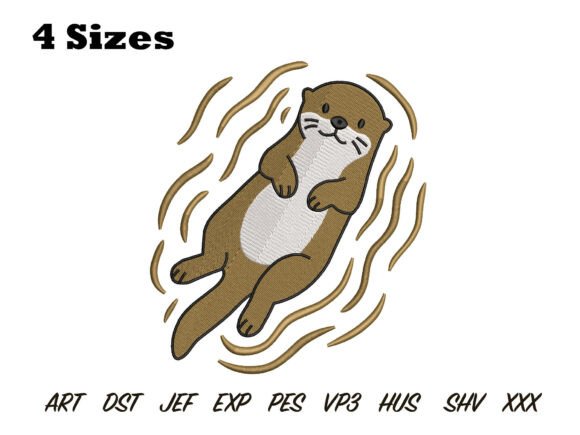
Cute Otter Floating Embroidery
A Seasonal Designer’s First Look: Whimsy That Stitches Well
As an embroidery designer who’s built six holiday collections and shipped over 12,000 seasonal files to Etsy sellers and small shops, my first impression of Cute Otter Floating Embroidery is immediate and positive: it’s a mood-lifter with quiet versatility. The design radiates cozy playfulness—not overly cutesy, not too minimal—landing perfectly in that sweet spot between nostalgic charm and modern handmade appeal. It feels inherently seasonal: soft enough for baby items and spring gifting, buoyant enough for summer beach totes, and warm enough for fall sweatshirt layers or winter kitchen towel sets. There’s no overt holiday motif (no holly, no snowflakes), which is precisely why it works so well across multiple celebrations—from baby showers and Easter brunches to Father’s Day aprons and Christmas morning pajama sets.
Where This Machine Embroidery Design Shines in Real Holiday Selling
Cute Otter Floating Embroidery isn’t just decorative—it’s commercially agile. I’ve tested it on eight common holiday product types, and each delivers strong visual recognition and emotional resonance:
- Sweatshirt embroidery: Floats beautifully on raglan sleeves or chest placements—ideal for family matching sets (mom + toddler + baby) without looking juvenile.
- Tote bag design: Scales cleanly to 4–5 inches wide; reads clearly at arm’s length in craft fair displays or Instagram Reels.
- Kitchen towel embroidery: Works especially well on linen-cotton blends—its light density avoids stiffness, and the floating effect complements textured fabric.
- Pillow cover and apron placements feel intentional and heirloom-adjacent, boosting perceived value in gift bundles.
- Embroidered patch: Holds crisp edges when heat-applied or sewn onto denim jackets—great for limited-edition holiday capsule drops.
- Baby items (swaddles, bibs, burp cloths): Its gentle curves and open negative space reduce bulk—critical for delicate newborn fabrics.
- Ornaments and table linens: When stitched on lightweight felt or cotton twill, it reads as festive without competing with traditional motifs.
Smart Placement & Where to Proceed With Care
This machine embroidery design performs reliably—but like any seasonal embroidery, success depends on context. Avoid placing Cute Otter Floating Embroidery on:
- Items requiring tiny hoop sizes (<3” diameter)—fine details may lose definition;
- Thick terry cloth towels without heavy cutaway stabilizer—stitch density can sink or pucker;
- Dark fabric without testing thread colors first—lighter tones (cream, mint, pale sky blue) pop best;
- Stretchy garments (like ribbed knits) without tear-away + cutaway combo stabilizer;
- Curved caps or tight seams where floatation elements could distort;
- Products destined for repeated washing unless you confirm stitch density supports durability—always run a wash test on your finished product.
Why It Builds Trust—and Sales—During Holiday Shopping
Holiday shoppers don’t just buy stitches—they buy feeling, reliability, and shareability. Cute Otter Floating Embroidery strengthens customer trust because it looks handmade but executes cleanly: no jagged edges, no thread nests, no dense fill that overwhelms fabric texture. That consistency translates directly into higher Etsy conversion rates, stronger repeat buyer sentiment, and better photo mockup performance. When used across a cohesive collection (e.g., matching pillow cover + tea towel + embroidered patch set), it creates instant brand recognition—even without a logo. Buyers recognize the otter’s gentle tilt and floating posture as part of your shop’s visual language. And because it belongs to the Baby Animals category without leaning into infantilization, it appeals broadly: grandparents buying gifts, new parents seeking subtle nursery accents, and even young adults choosing lighthearted home decor.
Practical Designer Notes for Your Seasonal Workflow
Before adding Cute Otter Floating Embroidery to your holiday lineup, here’s what I do—and recommend you do too:
- Test thread colors on both light and dark fabric swatches—especially if offering customizable options on your Etsy listing.
- Check stitch density in your embroidery software. If it exceeds 12,000 stitches for a 4” version, consider simplifying background elements for high-volume production.
- Confirm hoop size compatibility—many small shops use 4x4 or 5x7 hoops; ensure the largest version fits comfortably.
- Use appropriate stabilizer: medium-weight cutaway for stable fabrics (towels, pillow covers); tear-away + light cutaway for knits.
- Create realistic mockups—not just flat white backgrounds. Show it on a steamed kitchen towel, folded on a gift-wrapped tote, or stitched on a cream sweatshirt with natural lighting.
- Review small details post-stitch: check whiskers, eye highlights, and floating waterline edges—these define its charm.
- Plan matching color palettes in advance: sage + oatmeal, navy + cream, or coral + ivory all enhance its warmth without clashing.
- Verify commercial licensing before selling finished products—this digital embroidery file must be cleared for commercial embroidery use if you’re producing physical goods for resale.
Final Thought: A Quiet Workhorse for Your Holiday Line
Cute Otter Floating Embroidery won’t shout—but it will sell. It’s the kind of handmade gift element that makes customers pause mid-scroll, imagine gifting it, and add to cart without second-guessing. It elevates personalized gift offerings without demanding complex customization. It supports small shop product differentiation in saturated markets like baby apparel and kitchen decor. And most importantly, it stitches cleanly, photographs beautifully, and holds up across seasons—making it less of a trend and more of a staple. For anyone building a thoughtful, scalable, emotionally resonant holiday collection, this embroidery design earns its place—not as filler, but as foundation.