Merry Christmas Gingerbread Family Embroidery Design
First Impression: Festive, Friendly & Instantly Recognizable
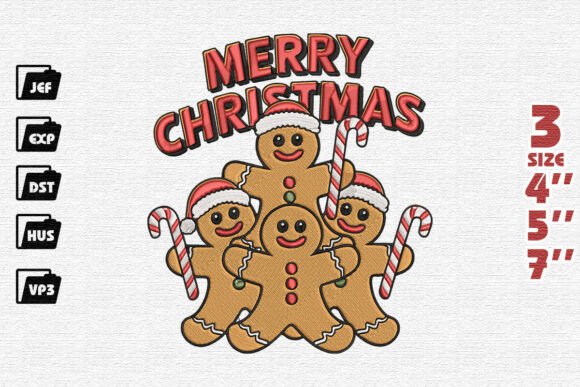
As an embroidery designer who’s prepped over 200 craft fair booths, I’ll tell you straight: Merry Christmas Gingerbread Family Embroidery Design lands with warmth—not whimsy, not irony, but genuine, approachable cheer. It’s festive without being flashy, cute without being cutesy, and family-focused without leaning into cliché. The “cheerful family of four gingerbread men posing together, each with a happy smile” reads instantly at booth distance—no squinting, no decoding. That’s gold for craft fairs, where buyers make split-second decisions while holding a latte and juggling tote bags.
Where This Design Shines on Handmade Products
This isn’t a one-trick design—it scales beautifully across your most reliable small shop products:
- Tote bag design: Centered on a natural canvas or linen tote, it becomes a conversation starter—friendly, seasonal, and uncluttered. Customers love carrying holiday spirit without shouting “MERRY CHRISTMAS” in 3-inch block letters.
- Apron embroidery: Positioned just above the pocket or centered on the bib, it adds handmade charm to kitchen-ready apparel. The gingerbread theme pairs perfectly with baking-themed boutiques and local café pop-ups.
- Tea towel embroidery: Works best on medium-weight cotton or linen blends. The design’s balanced proportions hold up well on textured fabric—no lost detail in the weave, especially if stitched with high-contrast thread colors (think red thread on cream towel).
- Embroidered patch: A standout option. Cut-and-sew patches let customers personalize jackets, backpacks, or stockings—and this design’s clean outlines and friendly faces translate crisply at 3–4 inches wide.
- Pillow cover & pouch embroidery: Its compact family grouping fits snugly on 12"–16" square covers and 5"×7" fabric pouches without crowding. No awkward cropping needed.
What Buyers Notice First—And Why It Converts
At a crowded craft fair, Merry Christmas Gingerbread Family Embroidery Design wins attention because it feels human. Not cartoonish. Not generic. Four distinct characters—each with expression, posture, and subtle costume variation—invite closer looks. That emotional resonance builds perceived value: shoppers see craftsmanship, not just decoration. Paired with quality stitching and thoughtful fabric choices, it elevates a simple tote bag into a giftable handmade product.
For Etsy sellers, it photographs cleanly—no busy background required. A single mockup on neutral wood or marble shows off stitch density and thread texture without distraction. And yes, it’s highly repeatable for batch production: consistent spacing, symmetrical layout, and moderate stitch density mean fewer thread breaks and faster hooping.
Careful-Use Notes for Real-World Production
Don’t skip these practical checks before cutting your first fabric:
- Dense stitch areas: Gingerbread buttons, eyes, and facial details may cluster tightly—test on your target fabric with recommended stabilizer. Heavy tear-away works best for smooth cotton; cut-away adds security for stretchy or textured towels.
- Small lettering: “Merry Christmas” is likely integrated—not isolated—so confirm legibility at your smallest intended size (e.g., 2.5" wide on a cap). If letters shrink below 0.2" height, they’ll blur on dark fabric or thick knits.
- Curved surfaces: Caps and curved market bags demand precise digitizing. Verify the embroidery file handles gentle contouring—look for tapered underlay and reduced density in arched zones.
- Fabric texture matters: On terry cloth tea towels or bouclé pouches, reduce stitch density slightly and increase stabilizer weight. Otherwise, the joyful faces risk looking fuzzy instead of friendly.
Booth Impact & Brand Alignment
In my booth setup, this design anchors a “cozy holiday gifting” zone—paired with cinnamon-scented sachets, hand-stamped tags, and twine-wrapped samples. It strengthens brand consistency when used across multiple product types: same thread palette (crimson, ivory, cocoa brown), same hoop size (5×7"), same stabilizer system. That cohesion tells buyers, “This maker pays attention.”
It also boosts buyer engagement: parents point it out to kids; couples comment on the “family vibe”; gift shoppers snap photos for Instagram Stories. That organic interaction? It slows foot traffic—and that’s where sales happen.
Must-Do Designer Checks Before You Stitch
- Test the machine embroidery design on scrap fabric matching your final product—same weight, same finish.
- Check thread contrast against at least three fabric colors: light, medium, and dark. What reads clearly on ivory may vanish on navy.
- Review spacing between figures—tight grouping risks thread nesting; too much gap weakens the “family” read.
- Confirm hoop size compatibility with your commercial embroidery machine and common home setups (many Etsy sellers use 4×4" or 5×7").
- Inspect stitch density in facial features—if eyes or smiles are over-digitized, they’ll pucker on lightweight cotton.
- Use the right stabilizer: medium-weight cut-away for structured items (caps, pouches); tear-away for tea towels and aprons.
- Create one real mockup—not just a printable mockup—before ordering bulk fabric. See how light hits the stitches. Feel the texture.
- Verify commercial licensing status. If selling finished products, ensure your digital embroidery file includes rights for physical resale—not just personal use.
Final Thought: A Reliable Holiday Workhorse
Merry Christmas Gingerbread Family Embroidery Design isn’t trendy—it’s timeless enough for repeat seasons, flexible enough for diverse product lines, and warm enough to feel personal. For craft fair sellers, Etsy sellers, and boutique makers, it’s a low-risk, high-return Christmas embroidery asset. It doesn’t ask for perfection in execution—just intentionality in pairing, testing, and presentation. Get it right once, and it’ll sell itself all December long.