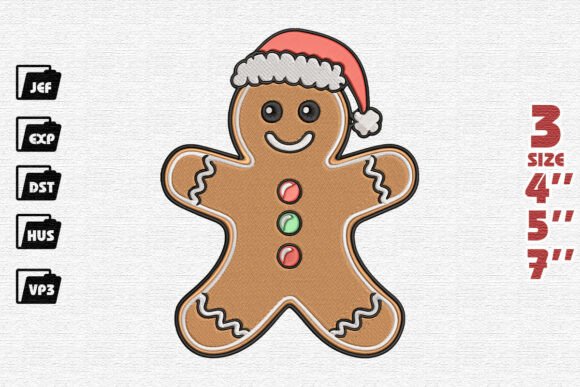
Christmas Gingerbread Man in Santa Hat
First Impression: Festive, Friendly, and Instantly Recognizable
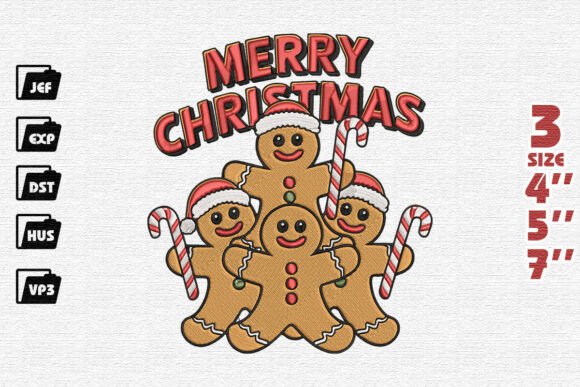
As an embroidery designer who’s prepped over 200 craft fair booths—and sold thousands of handmade items—I opened this Christmas Gingerbread Man in Santa Hat Embroidery Design with one question: “Will someone stop at my table for this?” The answer is yes. It reads as cheerful, warm, and authentically holiday—no irony, no edge, just pure seasonal charm. It leans into classic Christmas nostalgia without feeling dated or overly sweet. The Santa hat adds playful contrast to the gingerbread silhouette, while the red-and-green candy buttons offer built-in color guidance for thread selection. This isn’t minimalist or modern—it’s festive storytelling in stitch form, and that’s exactly what sells at handmade markets.
Where It Shines: Craft Fair Product Pairings That Convert
This design thrives where personality meets practicality. On a natural canvas tote bag? Perfect—centered above the pocket, it reads clearly from six feet away. On a cotton apron? Ideal for the chest or lower left corner; the friendly face invites conversation while baking demos happen nearby. For tea towel embroidery, place it near the top hem—its rounded shape balances the rectangle beautifully, and the candy buttons pop against textured terry cloth when stitched with high-contrast threads.
It’s also a standout on embroidered patches—small enough for iron-on application but bold enough to hold detail. As a cap front design? Use it on light-colored structured caps (not curved baseball styles unless you test hoop clearance first). On fabric pouches or pillow covers? Scale it to 3.5–4 inches wide for optimal impact—large enough to read, small enough to preserve stitching integrity on seams and corners.
For Etsy sellers and digital designers: this is a strong candidate for printable mockups. Its clean outline and balanced proportions translate well to lifestyle photos—think mugs, gift tags, and flat-lay market setups. Buyers instantly understand the theme, which cuts through visual noise in crowded online feeds.
Production Reality Check: What Works—and What Needs Caution
The Christmas Gingerbread Man in Santa Hat Embroidery Design is highly legible at a glance—no tiny lettering, no intricate script, no fragile linework. That makes it ideal for batch production across multiple fabric types. But don’t skip testing. Candy buttons are small, so check stitch density: if the file packs too many stitches into those red/green circles, they’ll blur on terry cloth or dense twill. Likewise, the Santa hat brim and cookie outline must remain crisp on dark fabric—confirm thread contrast before embroidering 50 tea towels.
Hoop size matters here. A 4x4 hoop fits the standard version comfortably, but if you’re scaling up for tote bags or pillow covers, verify the largest recommended size in the embroidery file metadata. Always use cutaway stabilizer for knits or stretchy fabrics, and tear-away for stable cottons and linens. And never skip a real mockup—stitch it on your actual apron fabric, not just scrap muslin. Texture changes everything.
Design Assets That Support Your Brand—Not Complicate It
This isn’t a design that fights your aesthetic. Whether your booth leans farmhouse, boutique, or whimsical handmade, the Christmas Gingerbread Man in Santa Hat Embroidery Design supports cohesion—not confusion. It pairs naturally with neutral backgrounds (cream, oat, charcoal) and complements other holiday motifs without competing. That means you can build a unified line: gingerbread man tea towels + matching oven mitts + patch-adorned market bags—all anchored by the same joyful character.
For small shop owners, that consistency builds trust. Customers remember your style, return for more, and tag you in social posts because the design feels intentional—not generic. That’s how a single embroidery file becomes part of your brand voice.
Why It Stands Out on the Booth Floor
In a sea of snowflakes and reindeer, this design stands out by being human. It’s approachable. It smiles. It invites touch and comment—“Oh, my grandma baked these!” or “My kid would love this on his backpack!” That emotional hook drives impulse buys at craft fairs, where decisions happen in seconds.
Visually, its circular shape draws the eye differently than angular motifs. Paired with warm thread tones (brick red, forest green, creamy tan), it radiates handmade quality—especially when stitched cleanly on premium cotton or linen. And because it’s not overly detailed, it photographs well even in low-light indoor markets. No need for heavy editing—just natural light and a clean background.
Smart Next Steps Before You Stitch
- Test on scrap fabric that matches your final product—especially for textured tea towels or curved cap surfaces.
- Check thread contrast on both light and dark base fabrics; red/green buttons need clarity, not bleed.
- Review spacing and stitch density—if the design feels heavy or muddy in the candy areas, reduce density slightly or adjust underlay.
- Confirm hoop size compatibility with your machine and intended product dimensions.
- Use the right stabilizer: cutaway for stretch, tear-away for wovens, fusible for lightweight patches.
- Create at least one real mockup—not digital—to assess scale, placement, and tactile appeal.
- Compare fabric colors side-by-side: cream vs. ivory, kelly green vs. emerald—the wrong pairing dulls the festive energy.
- Verify commercial licensing before selling finished products—this is non-negotiable for Etsy sellers and wholesale partners.
The Christmas Gingerbread Man in Santa Hat Embroidery Design isn’t just another holiday file. It’s a reliable, emotionally resonant, production-smart asset—one that earns attention, reinforces your handmade credibility, and converts browsers into buyers. In a weekend craft fair, that’s not just value—it’s revenue, repeat customers, and the quiet confidence that comes from knowing your embroidery file was chosen—and tested—with purpose.