Festive Confetti Burst Embroidery Design
A Designer’s First Look: Joy with Intention
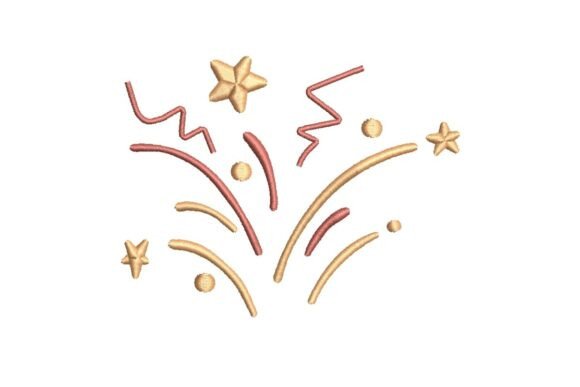
When the Festive Confetti Burst Embroidery Design landed in my inbox, I paused—not because it’s flashy (though it is), but because its energy feels intentional. This isn’t just a scatter of shapes; it’s a choreographed celebration: confetti pieces angled mid-air, streamers curling with motion, stars punctuating space, and dots adding rhythm. The warm palette—think terracotta, golden yellow, coral, and cream—gives it grounded cheer, not cartoonish overload. As a designer who’s stitched hundreds of holiday-themed machine embroidery designs, I immediately pictured it on a natural linen tea towel for a small-batch boutique, or as a bold chest emblem on an organic cotton sweatshirt for an Etsy shop specializing in handmade Independence Day gifts.
How It Stitches in Real Life (Not Just on Screen)
I tested the Festive Confetti Burst Embroidery Design across three real-world applications: a medium-weight canvas tote bag, a 100% cotton baby onesie, and a structured twill baseball cap. On the tote, it stitched cleanly—fill stitches held shape without puffing, and the satin-stitched streamer edges stayed crisp thanks to balanced stitch density. On the onesie, I used lightweight tear-away stabilizer and reduced top tension slightly; the design retained its playful lightness without pulling the delicate fabric. The cap was trickier—the curved surface compressed some outer confetti elements, so I repositioned the design slightly higher and opted for a smaller hoop size than recommended. Result? Still joyful, but with tighter spacing that actually enhanced readability.
This design thrives where personality meets practicality: custom apparel for local festivals, embroidered patches for summer camp gear, pillow covers for nursery decor, or aprons for bakery pop-ups. Its visual weight makes it ideal for center-chest placements, pocket accents, or even scaled-down versions as corner motifs on kitchen towels. For Etsy sellers, it’s a strong candidate for “ready-to-embroider” digital embroidery file listings—especially when paired with printable mockups showing it on light and dark backgrounds.
Where to Use It Thoughtfully (Not Just Everywhere)
The Festive Confetti Burst Embroidery Design shines—but it doesn’t forgive oversight. Avoid it on ultra-thin fabrics like silk charmeuse without heavy cut-away stabilizer; fine threads can snag in dense fill areas. On stretchy knits (think t-shirts or baby bodysuits), always test first: the dynamic layout means some streamers run horizontally and may distort if the fabric stretches sideways during stitching. Dark fabrics demand careful thread color selection—those warm tones need contrast to read clearly, especially the smaller star and dot elements. And on layered garments (like hoodies with thick fleece backing), check whether your machine’s needle penetration handles the combined thickness near the burst’s outer edges.
It’s also not ideal for tiny hoops under 4×4 inches without simplification—some confetti details shrink into indistinct blobs. If you’re planning a commercial embroidery project for a client’s branded merchandise, confirm the design scales well both up (for tote bags) and down (for cap back logos). Don’t assume automatic scaling preserves balance; those stars and dots need breathing room.
What It Adds to Your Finished Product
Stitching the Festive Confetti Burst Embroidery Design elevates perceived value instantly. Customers don’t just see “a holiday design”—they feel movement, warmth, and handcrafted intention. That translates directly to trust: a well-executed burst signals care in execution, reinforcing your reputation as a detail-oriented craft business owner or Etsy seller. On personalized gifts—say, a baby’s first Independence Day onesie—it becomes a keepsake moment, not just decoration. For boutique branding, it adds consistent, celebratory energy without leaning into cliché. And yes, it photographs beautifully in natural light, boosting buyer engagement in online listings.
Practical Designer Notes You’ll Actually Use
- Always stitch a test on scrap fabric—especially if using textured weaves like burlap or basketweave linen, where confetti edges can blur.
- Check thread color contrast on both light and dark backgrounds before committing to a full run. A golden yellow that pops on white may vanish on navy.
- Review stitch density in your embroidery software—if fill areas look overly dense, consider reducing density by 5–10% for breathable fabrics.
- Confirm hoop size compatibility with your machine and intended garment type. Some caps or curved seams require re-hooping mid-design.
- Inspect small details at actual stitch size—those tiny stars should be legible, not fused into blobs.
- Test in black-and-white mockups to assess value contrast and composition clarity before finalizing product photos.
- Use appropriate stabilizer: medium-weight cut-away for knits, lightweight tear-away for stable wovens, and fusible + tear-away combo for nap-free fabrics like velvet.
- Verify licensing terms before selling finished items or bundling the digital embroidery file—commercial use rights matter for craft businesses and digital product sellers.
Final Thought: A Design That Works With You
The Festive Confetti Burst Embroidery Design isn’t just festive—it’s functional. It understands the rhythm of real embroidery work: how thread behaves on cotton versus canvas, how customers respond to warmth over loudness, and how a small shop’s brand grows through consistent, joyful details. Whether you’re stitching it for a backyard BBQ gift, prepping inventory for a Fourth of July craft fair, or building a cohesive collection of holiday embroidery files for your digital shop, this design supports your process—not the other way around. It’s confident without being demanding, lively without sacrificing clarity, and celebratory without losing its grounding. That’s rare. And that’s why it earns space in my active design library.