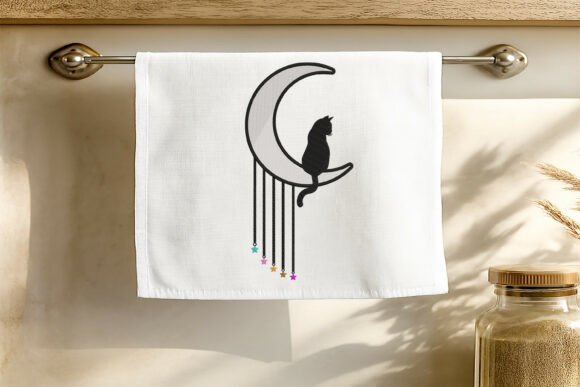
Moon Cat Embroidery Design
A Practical Review for Small Business Merch & Branded Patches
As an embroidery designer who’s digitized and stitched thousands of designs for cafés, boutiques, florists, pet brands, and handmade studios, I approach every new machine embroidery design with two questions: Does it communicate brand intent clearly? and Will it hold up in real-world production? When I first saw the Moon Cat Embroidery Design—described as “Celestial Crescent, Stars, Floral Books Digital Download, Wildflowers Design, Love Hands Line Art”—my instinct was to pause. This isn’t just a decorative motif; it’s a visual statement that small businesses will use on aprons, tote bags, staff caps, and embroidered patches meant to represent their identity.
First Impression: Playful, Handmade, and Quietly Premium
The title alone signals warmth and intention: “Moon Cat” evokes whimsy and calm, while “Celestial Crescent,” “Stars,” and “Wildflowers” suggest organic elegance—not Halloween kitsch, despite its category placement. The inclusion of “Love Hands Line Art” hints at gentle human touch, ideal for artisanal brands. Visually, this Moon Cat Embroidery Design reads as handmade but professional, not overly rustic or cartoonish. That balance is rare—and valuable—for small business merch. A florist can use it on linen aprons without looking costumed; a pet-friendly café can stitch it onto staff tote bags and feel authentically aligned with care and creativity.
Where It Shines in Commercial Embroidery
This Moon Cat Embroidery Design excels where subtlety and storytelling matter:
- Embroidered patches for jackets or shop signage—its layered elements (crescent, cat silhouette, floral accents) translate well into 2.5"–3.5" patch formats when digitized with clean underlay and balanced fill density.
- Apron embroidery on chest or pocket—its vertical flow and moderate width avoid distortion on curved seams, especially when paired with quality tear-away stabilizer.
- Tote bag design centered above the handle seam—its celestial theme feels intentional, not generic, elevating everyday carry items into branded keepsakes.
- Cap embroidery on front panels—works best on structured cotton twill or brushed polyester when scaled to 2" height and simplified slightly to preserve clarity on curved surfaces.
- Product packaging accents—think stitched tags on gift boxes or fabric labels inside handmade soaps or candles. Its line-art roots mean it stitches cleanly even at reduced sizes if the original digital embroidery file maintains open paths and minimal jump stitches.
Use With Care: Real-World Production Notes
Not every surface or scale suits this Moon Cat Embroidery Design equally. As a working embroidery designer, I recommend caution in these scenarios:
- Small patch sizes under 2": The floral books and star details may blur or stitch poorly unless the digital embroidery file was optimized for miniaturization. Always test at target size before bulk production.
- Dark uniforms or textured fabric: High thread color contrast is essential. If your small business uses navy or charcoal work shirts, verify that light-thread versions (ivory, soft gold, pale sage) are included—or plan custom thread substitutions.
- Frequent washing: While line art typically holds up better than dense fills, check stitch density in the wildflower clusters. Overly dense areas may stiffen or wear faster on aprons or staff tees.
- Curved cap fronts or sleeve cuffs: The crescent shape and delicate hands benefit from proper hooping technique and cutaway stabilizer—not just basic tear-away—to prevent puckering.
How It Strengthens Brand Identity & Customer Trust
In a marketplace flooded with clip-art logos and AI-generated motifs, the Moon Cat Embroidery Design stands out by feeling authored. That matters deeply for small businesses building recognition through tactile, consistent assets. When customers see this same design stitched on a barista’s apron, printed on a takeaway tote, and embroidered on a limited-run patch sold at a local makers’ market—they register cohesion. Not sameness, but continuity. That consistency builds trust: it signals intentionality, attention to detail, and pride in presentation.
For Etsy sellers and craft businesses, this Moon Cat Embroidery Design supports perceived value. Unlike generic fonts or stock icons, its blend of celestial, botanical, and hand-drawn cues communicates care—making handmade products feel more personal, more premium, and more memorable. It doesn’t shout; it invites closer look. And in merch, that quiet confidence often converts better than boldness.
Essential Designer Checks Before You Stitch
Before ordering thread, prepping fabric, or sending files to your embroidery machine, run through these practical steps:
- Test in black and white first—to assess contrast, spacing, and legibility without color distraction.
- Verify small patch viability—scale down to your smallest intended use (e.g., 1.75") and inspect stitch paths in your embroidery software.
- Review thread color suggestions—especially for dark or mid-tone fabrics. Does the digital embroidery file include alternate colorways, or will you need to recolor manually?
- Confirm hoop size compatibility—some floral or crescent-heavy layouts require larger hoops; check before digitizing for commercial embroidery.
- Test on real fabric—not just stabilizer swatches. Linen, canvas, and twill behave differently under needle stress.
- Use appropriate stabilizer—cutaway for knits or stretchy tote fabrics; tear-away for stable linens or cotton caps.
- Create a printable mockup for client approval—show how the Moon Cat Embroidery Design sits on actual garment photos, not just blank templates.
- Compare beside existing design assets—does it harmonize with your logo, typography, and other embroidered elements across your brand system?
- Confirm commercial licensing—this Moon Cat Embroidery Design is marketed for small business merch, but always double-check terms before using on paid products, wholesale items, or resale patches.
The Moon Cat Embroidery Design isn’t just another Halloween-themed embroidery file—it’s a versatile, emotionally resonant asset for businesses that value authenticity over algorithmic trends. When used thoughtfully—with attention to scale, fabric, thread, and brand context—it becomes more than decoration. It becomes part of your story.